
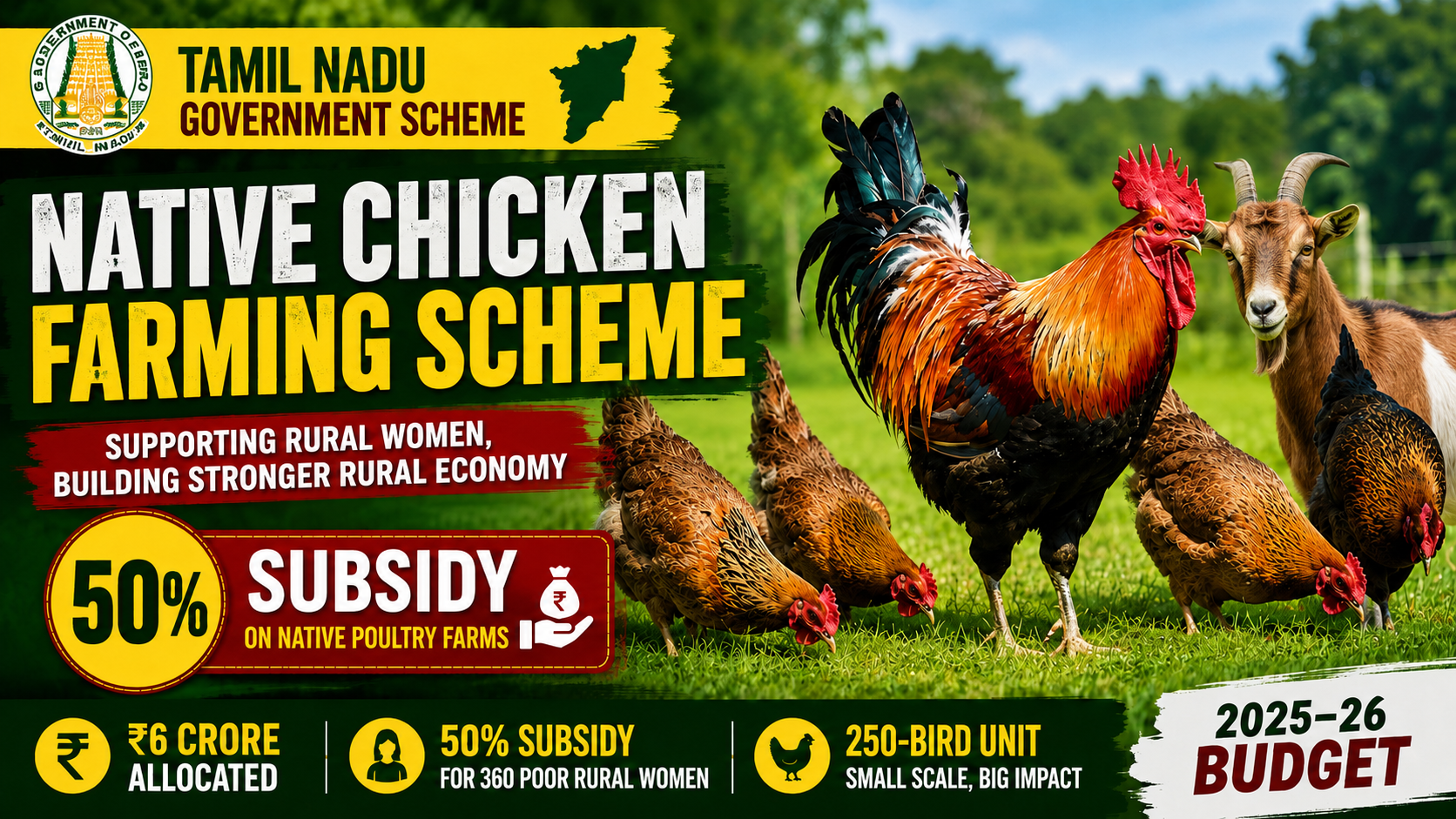
Native Chicken Farming Scheme of Tamil Nadu is a good opportunity for rural families and small businesses who want to start native chicken farming company. Native chicken or country chicken has excellent demand in Tamil Nadu since many consumers like country chicken and native chicken eggs for its taste and cultural values. The Tamil Nadu Government has been promoting native poultry farming through subsidy-based schemes to encourage rural entrepreneurship and create new avenues of revenue. In its latest budget statement for 2025-26, the government has set aside ₹6 crore to provide a 50% subsidy to 360 rural women from disadvantaged sections who want to take up native poultry farming to set up native chicken farms. Native chicken farming is a good choice to consider for those who are seeking for a small-scale farming company with consistent income potential. But applicants should verify the latest qualifying criteria and application process with the local Animal Husbandry Department before applying.
What is the Native Chicken Farming Scheme in Tamil Nadu?
establishment of small scale native chicken farms in rural locations. “The scheme is aimed at supporting those who want to raise local fowl and make poultry farming a source of income. The Animal Husbandry Department has started a project for building small-scale native chicken farm units of 250 birds per unit capacity. Under the initiative, 50% subsidy is offered on eligible components including construction of poultry shed, acquisition of equipment and feed expenditures for four months up to grower stage. The plan is especially advantageous for rural participants as starting up a poultry farm usually involves an initial expenditure towards shed, equipment, birds and feed. Government funding can offset part of this initial financial impact.
Native Chicken Farming Subsidy in Tamil Nadu
One of the key reasons why people search for Native Chicken Farming Scheme in Tamil Nadu is the subsidy for starting native chicken farms. The Tamil Nadu Government in its 2025-26 budget statement announced a 50% subsidy for 360 poor rural women who are willing to take up native poultry farming with an outlay of Rs 6 crore. Previously, the Animal Husbandry Department has also outlined a 50% subsidy strategy for small-scale native chicken farm units. The subsidy was meant to pay eligible expenses such as building a poultry shed, equipment, feed for four months. The amount of subsidy, target group of beneficiaries and the instructions for execution may differ from year to year and the applicants may check the information of the current year with the local veterinary institution or the office of the Animal Husbandry Department.
How Many Chickens Can Be Reared Under the Scheme?
The Animal Husbandry Department of Tamil Nadu has come up with a concept for native chicken farming on a modest scale based on a unit of 250 birds. The initiative was developed to assist the recipients to construct a manageable chicken farm and not to require a very large commercial operation at the beginning. A native chicken farm with 250 birds can be acceptable for rural households with enough area and willing to manage daily poultry activities. Good housing, clean drinking water, good feeding practices, vaccination and disease control are important to keep birds healthy. Farmers should also be aware that the actual bird numbers, infrastructure needs and other conditions may vary depending on the current plan parameters.
Eligibility for Native Chicken Farming Scheme
Eligibility requirements can vary depending on the particular year and implementation guidelines. Under the small-scale native chicken farm scheme, beneficiaries are required to have sufficient land to construct the poultry shed.
The Animal Husbandry Department has specified a minimum of 625 square feet of land for constructing the poultry shed under the relevant 250-bird unit scheme. The beneficiary is also expected to contribute the remaining share of the project cost through their own funds or eligible bank finance.
Applicants should also be prepared to maintain the farm according to the conditions prescribed by the department. In the scheme details currently available from the department, beneficiaries are required to undertake to maintain the farm for at least three years.
Before submitting an application, it is advisable to confirm the following:
- Whether the scheme is currently open in your district
- Current beneficiary eligibility conditions
- Land and poultry shed requirements
- Current subsidy amount
- Bank loan or beneficiary contribution requirements
- Required documents
- Application deadline
- Inspection and approval procedure
Documents Required for Native Chicken Farming
The list of specific documents may vary depending on the notification and local implementation at that time. The candidates should get the current application form and document checklist from the concerned Animal Husbandry Department office or veterinary institution. The usual documents asked are proof of identity, proof of address, pictures, bank account data and documentation related to the prospective farm location. The applicants may also be asked to provide land related documents and such other statements as are necessary under the plan. Incomplete applications can delay the approval process, so it’s advisable to check the document requirements before submitting the application.
How to Apply for Native Chicken Farming Scheme in Tamil Nadu
Those who want to know about the Native Chicken Farming Scheme Tamil Nadu should visit the nearest government veterinary institution or concerned Animal Husbandry Department office. The scheme information of the department states that applicants can get the application from the nearest veterinary institution and submit the filled application with relevant documentation. Then the application is processed through the applicable departmental personnel.
A simple application process generally involves the following steps:
- Visit the nearest government veterinary institution.
- Ask about the current Native Chicken Farming Scheme.
- Collect the application form and current eligibility details.
- Prepare the required documents.
- Submit the completed application.
- Allow officials to verify the proposed farm location and eligibility.
- Complete bank finance formalities if required.
- Construct the poultry shed according to the approved requirements.
- Purchase the required equipment and birds as permitted under the scheme.
- Start the native chicken farm and maintain it according to the scheme conditions.
Applicants should not depend on old subsidy figures found on social media or unofficial websites. Scheme guidelines can change, so the latest information from the Tamil Nadu Animal Husbandry Department should always be treated as the primary reference.
Things to Know Before Starting Country Chicken Farming
Farmers should choose a good place for the poultry shed before starting a Country Chicken Farming enterprise. The region should be well ventilated, drained, and have access to good drinking water. Birds should receive suitable diet depending on their age and stage of growth. Routine vaccinations and preventive veterinary treatment are also necessary. Farmers should consider the market before buying huge numbers of birds. Depending on geography, different selling opportunities may be available from local meat shops, consumers, hotels, restaurants and direct customers. Keeping track of feed prices, bird numbers, mortality, sales and other costs can allow farmers to know if their farm is genuinely making a profit.
Native Chicken Farming Scheme: Important Points
The Native Chicken Farming Scheme in Tamil Nadu is intended to encourage rural poultry farming and provide financial assistance through subsidy support. The latest 2025–26 budget announcement specifically mentioned 50% subsidy support for native poultry farms for 360 poor rural women. The Animal Husbandry Department has also implemented small-scale 250-bird native chicken farm units with 50% subsidy for eligible components such as poultry shed construction, equipment and feed. However, applicants should remember that scheme availability, district coverage, beneficiary selection, subsidy limits and application procedures can change. Therefore, checking the latest notification before applying is essential.
Coclusion
For qualified rural beneficiaries who wish to begin or grow a small poultry farming business, Tamil Nadu’s Native Chicken Farming Scheme may be a helpful option. Native chicken farming can become an extra source of income in rural areas with the help of subsidies, good farm management, and a stable local market. However, before making an investment or filing an application, candidates should always confirm the most recent government announcement. Between fiscal years, subsidy amounts, eligibility requirements, and implementation processes may vary. Before moving forward, farmers should verify the current plan specifics with the Tamil Nadu Animal Husbandry Department or the closest government veterinary facility.




2 Comments on “Native Chicken Goat Farming Super Scheme in Tamil Nadu 2026”