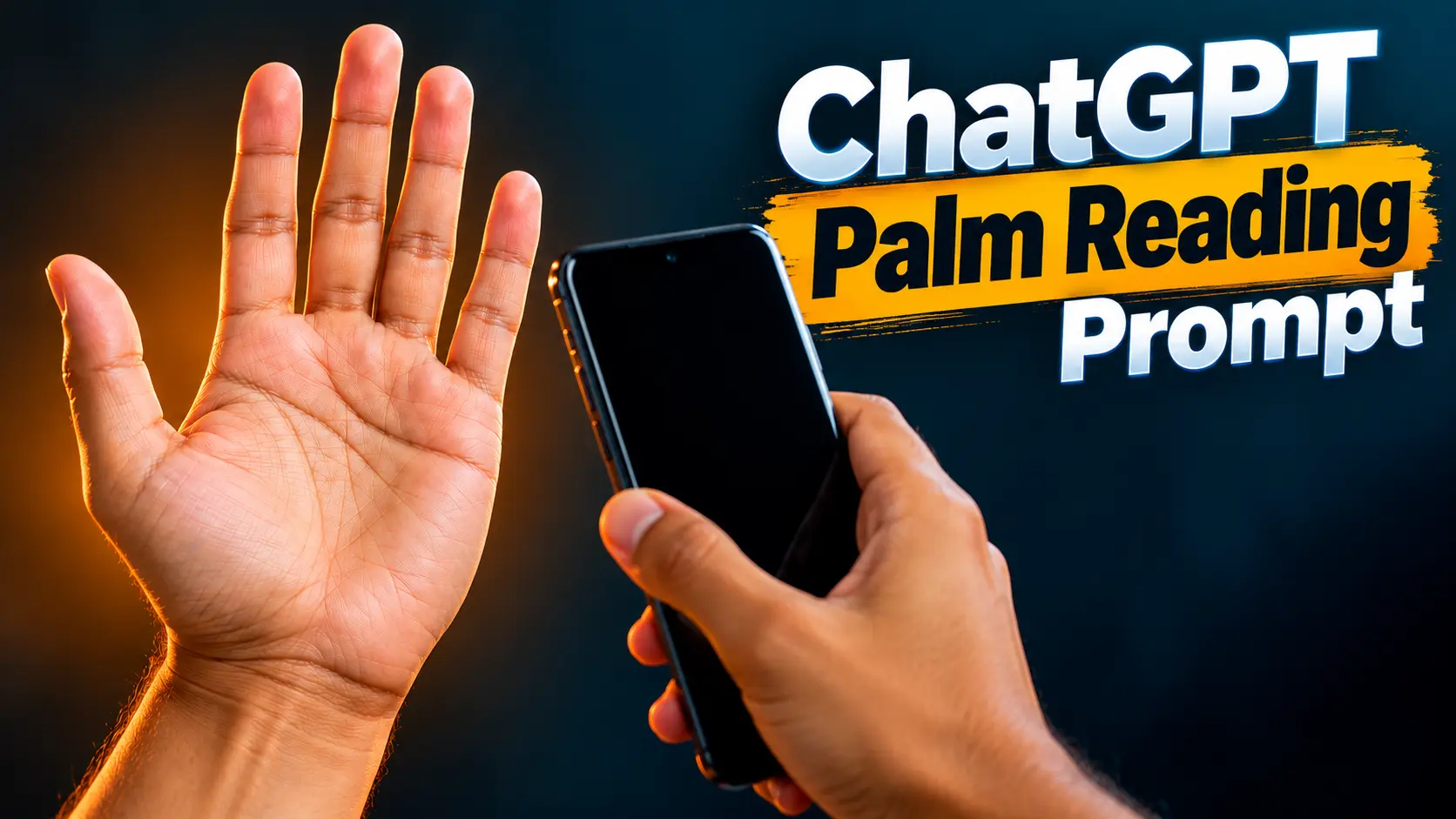
Almost everyone has looked at their own palm at some point and wondered what those lines are supposed to mean. Palmistry has a long history in many cultures (Britannica has a short background entry), and some people now upload a hand photograph to ChatGPT and ask for a reading in their own language. This guide covers how to take the photo, how to upload it, which ChatGPT palm reading prompt to paste, and what kind of Tamil reply to expect.
Please read this first. Palmistry is a traditional belief and an entertainment practice. It is not a scientifically validated way to understand personality or predict events. A palm photograph cannot verify future events, a future spouse’s identity, an exact marriage date, medical conditions, lifespan, or financial outcomes. Everything in this article, and the prompt itself, treats the reply as a symbolic reading for enjoyment and reflection. Please do not make medical, financial, career or marriage decisions based on it.
So what can you realistically expect? With a clear photo, ChatGPT can describe the lines and shapes it can see, explain what palmistry tradition says about them, and write everything in Tamil. It cannot read your fate, and the prompt in this article is written to stop it from pretending otherwise.
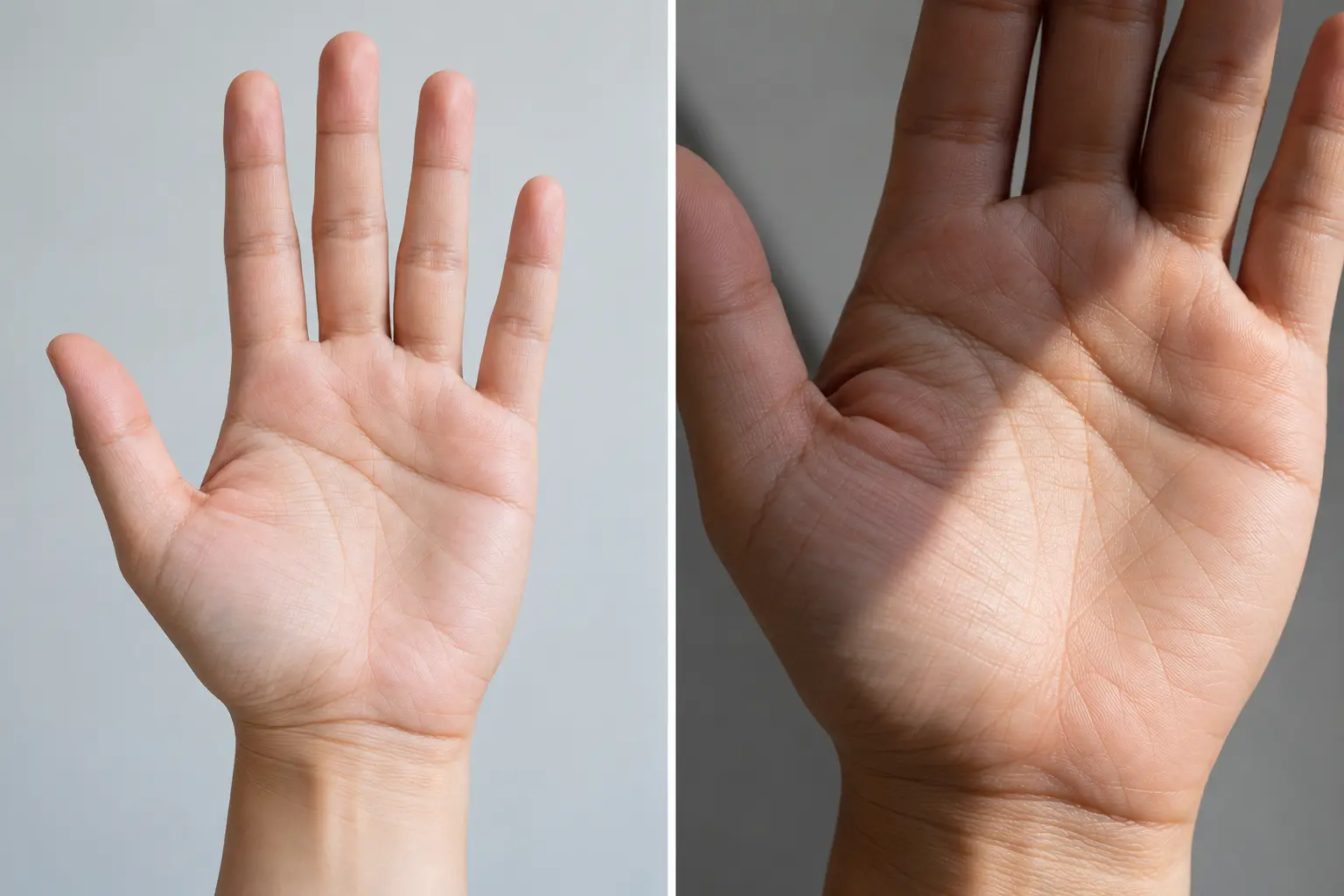
How to photograph your palm for a ChatGPT palm reading prompt
The quality of the photo decides how much ChatGPT can describe. A dark, blurry or cropped image leads to vague answers and guesswork. Spend five minutes and do it properly.
- Use soft daylight. Stand near a window in the morning or late afternoon. Direct sun creates harsh shadows, and yellow room bulbs change the colour of the skin.
- Choose a plain background. A plain wall, a white bedsheet or an empty table works well. Patterned cloth or a cluttered desk only distracts.
- Clean the camera lens. A thumbprint on the lens is the most common reason for hazy photos. Wipe it with a soft, clean cloth.
- Relax your hand. Keep the palm facing the camera with the fingers slightly separated. Do not stretch the hand so hard that the skin tightens, because the lines flatten when you do.
- Show the whole palm. The frame should include the wrist crease at the bottom, the full thumb, and all five fingertips. Leave a little empty space around the hand so nothing is cut off.
- Hold the camera straight. Keep the phone parallel to your palm. A steep angle makes fingers look shorter or longer than they are.
- Switch off filters and effects. Beauty mode, portrait blur and flash all change what the lines look like. Flash also creates shiny patches on the skin.
- Avoid shadows and movement. Make sure your own phone or body is not blocking the light. Rest your elbow on a table, or ask someone you trust to take the photo.
- Check the focus before uploading. Zoom into the photo on your phone. If you cannot clearly see the main lines, retake it now rather than hoping ChatGPT can work it out.
- Know which hand it is. Decide whether the image shows your left or right hand, and which of your hands is dominant (the one you write with). You will type this into the prompt later, so ChatGPT does not have to guess.
Most bad palm photos fail in the same ways: the wrist is cut off, the thumb is outside the frame, one side sits in shadow, or the fingers are bunched together.
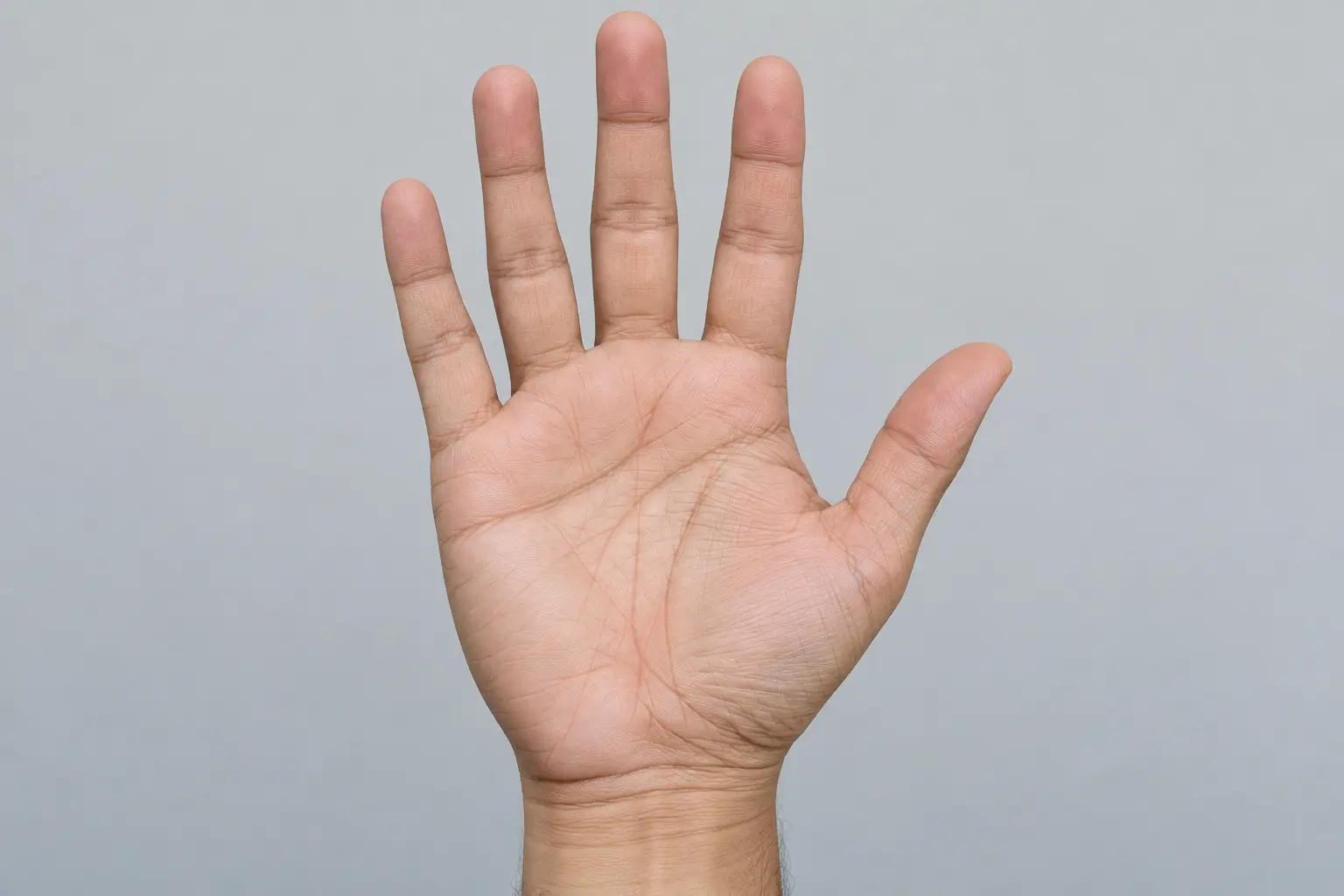
You can also photograph both hands, one after the other, as two separate photos. Label them clearly when you send them, for example “Photo 1: right hand” and “Photo 2: left hand”. Palmistry books often discuss the two hands separately, so this gives ChatGPT something real to compare instead of one unlabelled image.
The marriage line needs a special mention. In traditional palmistry, small horizontal lines on the outer edge of the palm, just below the little finger, are linked with relationships. In a flat front-facing photo this area may be hidden. If you want that part commented on, take one more photo from the little-finger side with the hand slightly tilted, and tell ChatGPT it is a side view.
Do not expect every minor line to show up. Faint or missing lines are normal, and a good reply will say “cannot be assessed” instead of inventing them.
Privacy checks before you upload
A palm photo looks harmless, but the background can say a lot about you. Keep faces, documents, letters, addresses and name boards out of the frame. Remove rings or bangles with names or engravings, or crop them out.
Use your own hand, or get clear permission from the person whose hand you are photographing. Do not upload a photograph of someone else’s palm without asking them first.
Also be realistic about privacy. Do not assume an uploaded photo is automatically deleted or completely private. OpenAI explains in its help pages how content may be used to improve its models and what controls you have, including a Temporary Chat option. Menus and options change from time to time, so read the current page before you decide what you are comfortable sharing.
How to upload your palm photo to ChatGPT
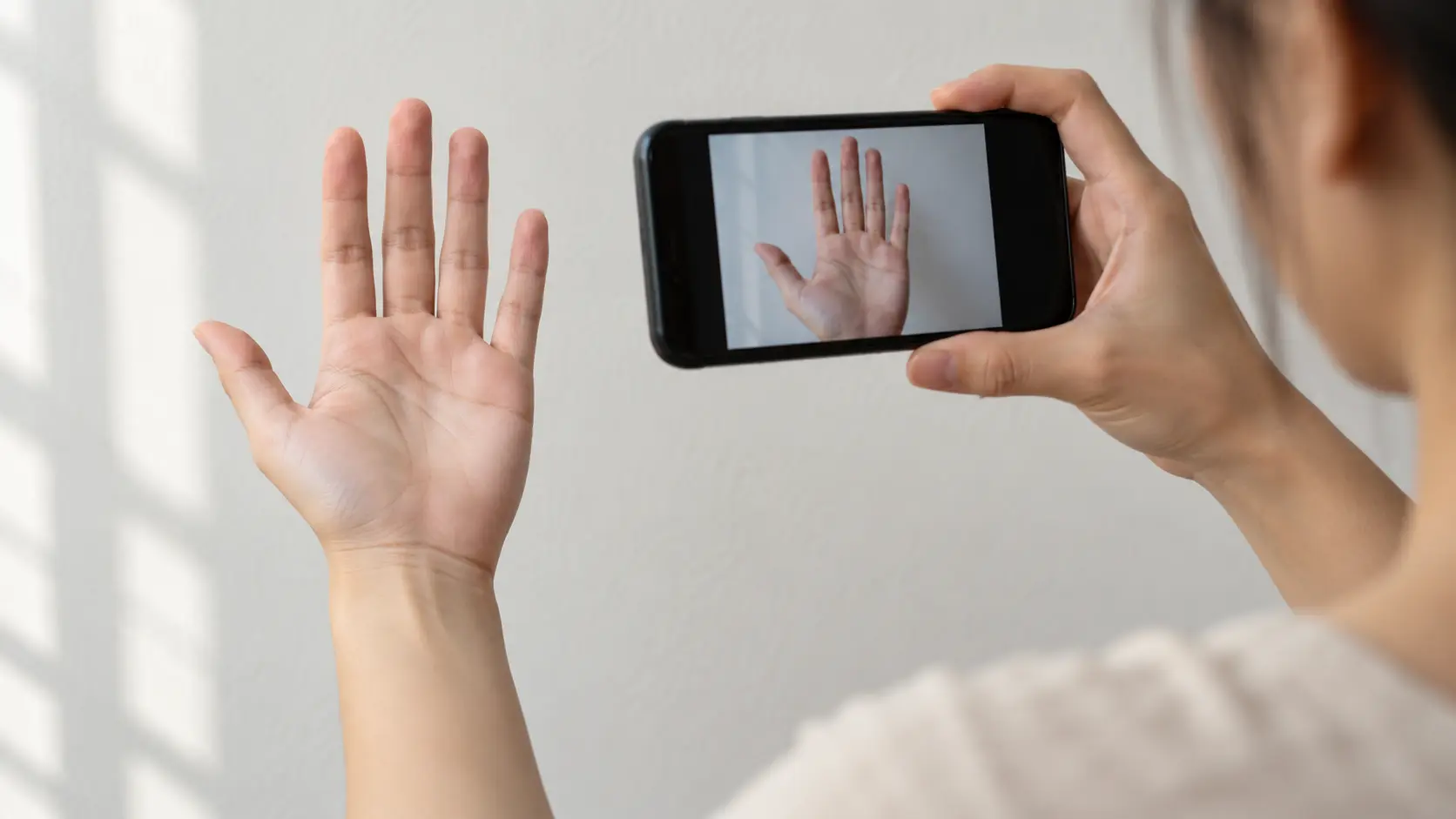
There is no special palm scanner or astrology mode inside ChatGPT. You use the normal photo upload that works for any image, and then you paste the prompt. Also remember that this article cannot analyse your palm. The photograph has to be uploaded to ChatGPT by you.
- Open the ChatGPT app on your phone, or go to chatgpt.com in your browser, and sign in.
- Start a new chat so the reading is not mixed up with older conversations.
- Tap the plus (+) icon in the message area and choose Add photos & files. On a computer you can also drag the image into the message box or paste it from the clipboard. Button names can differ slightly between app versions and devices.
- Pick your palm photo from the gallery or file list. If you are using two hands, select both and note which is which.
- Wait until a small preview of the photo appears in the message box. If the preview does not appear, the upload has not finished.
- Paste the prompt from the next section into the message box, fill in the bracketed lines at the top, and send.
OpenAI’s own image inputs help page lists the supported formats as PNG, JPEG and non-animated GIF, with a limit of 20MB per image. Usage limits depend on your plan and can change, so I will not promise unlimited uploads. The file uploads page describes daily and rolling caps, and says they may be lowered during busy hours. If you hit a limit, wait and try later or check your plan.
If you are new to prompts like this, you can also browse the other posts on the ReelsTamil home page.
The copy-ready palm reading prompt
Below is the full prompt. It stays in English on purpose, because ChatGPT follows detailed English instructions reliably, but it asks for the answer entirely in Tamil. To copy it on a phone, press and hold at the start of the first line, drag the handles to the end of the last line, and tap Copy. On a computer, click at the start, hold Shift, click at the end, and press Ctrl+C. Then paste it into the message box beside your photo.
Before sending, replace the four bracketed lines at the top with your real details. If you do not want to discuss one of the topics, delete it from the list.
My details (I will fill these in before sending):
Hand shown in this photograph: [left / right]
My dominant hand: [left / right]
Today’s date: [write today’s date]
Topics I am curious about: [for example: personality, career, relationships, marriage, 2026]Look carefully at my uploaded palm photograph. Answer entirely in natural, easy-to-understand Tamil.
First describe only the visible physical features. State whether the photograph is clear enough and which areas cannot be assessed. Do not invent missing lines or guess my dominant hand.
Then, separately, offer an optional traditional palmistry-style interpretation for entertainment and personal reflection. Make clear that these associations do not establish my actual personality or predict my future.
Cover, only where visible: Life line, Head line, Heart line, Fate line, Sun line; minor lines traditionally associated with marriage, health, and travel; mounts associated with Venus, Jupiter, Saturn, Sun, Mercury, Moon, and Mars; finger proportions, thumb structure, palm shape, and hand formation.
For every feature discussed, distinguish:
1. What is visibly present.
2. What palmistry tradition associates with it.
3. What cannot reasonably be concluded.Do not infer illness, lifespan, mental health, religious identity, or guaranteed personal traits from my hand. Do not invent faint or hidden features. Ask for a clearer photograph when necessary.
If discussing personality, mindset, emotional nature, strengths, weaknesses, decision-making, or spiritual themes, frame them as optional reflection questions based on the tradition, not verified facts about me.
Address my curiosity about career, love, marriage, opportunities, and challenges in 2026 without predicting specific events, dates, or probabilities from the palm. Consider the current date and do not describe past months as future.
Explain that my future spouse’s name, identity, initials, appearance, and exact marriage timing cannot be determined from the photograph.
If I request a lucky colour or lucky number, offer it only as a clearly labelled playful symbolic suggestion. Do not pretend the photograph proves it.
Keep the explanation personal to the visible details without using generic flattering statements. Clearly acknowledge uncertainty.
What the reply may look like
The reply is usually long. With this prompt it should follow roughly this order: a note on photo quality and what could not be assessed, a plain description of what is visible, then the optional traditional interpretation with each feature split into what is seen, what tradition says, and what cannot be concluded. Near the end comes the 2026 reflection and a reminder that marriage details cannot be read from a photograph.
Here is a short fictional illustration of one feature, written only to show the structure. It is not a real reader’s result, and it is not evidence of accuracy.
புகைப்படத்தில் தெரிவது: இதய ரேகை தெளிவாகத் தெரிகிறது. விதி ரேகை தெளிவாக இல்லை.
பாரம்பரிய கருத்து: இதய ரேகை உணர்வுகள் மற்றும் உறவுகளுடன் தொடர்புடையதாகப் பாரம்பரிய கைரேகை சாஸ்திரம் கூறுகிறது.
இதிலிருந்து முடிவு செய்ய முடியாதது: உங்கள் உண்மையான குணத்தையோ எதிர்காலத்தையோ இந்தப் படத்திலிருந்து உறுதி செய்ய முடியாது. விதி ரேகையைப் பற்றி கருத்து சொல்ல இன்னும் தெளிவான படம் தேவை.
In English: the heart line is visible, the fate line is not clear; tradition links the heart line with feelings and relationships; and nothing about your real personality or future can be confirmed from the image. If your reply sounds like a confident forecast, something has gone wrong.
How to treat the topics everyone asks about
Palmistry traditions talk about all of these themes, so the prompt allows them. Read the answers as symbolic ideas and reflection prompts, not as facts found on your hand.
Personality, strengths and decision-making
Traditional texts connect the head line with thinking style and the thumb with willpower. They are not measurements. Treat each one as a question instead: do I tend to decide quickly or slowly, and is that working for me?
Career and relationships
The fate line, sun line and heart line may be mentioned. They cannot tell you which job suits you or whether a relationship will last. Turn any interesting theme into a practical question about your own work or friendships.
Marriage
The prompt tells ChatGPT to explain that a future spouse’s name, initials, appearance, location and any marriage date cannot be determined from a photograph. If a reply claims otherwise, ignore that part.
Lucky colours and lucky numbers
The prompt makes ChatGPT label these as playful symbolic suggestions. They are not extracted or verified from the lines on your hand. Treat them like picking a favourite colour for a notebook.
Spiritual themes
Some people see palmistry as part of a wider spiritual tradition. The prompt asks for spiritual themes to be framed as optional reflection questions and tells ChatGPT not to guess your religion or beliefs from your hand.
Your interest in 2026
With November and December still left in 2026, many readers wonder about the rest of the year. The prompt asks ChatGPT to check today’s date, not describe past months as upcoming, and avoid specific events, dates or probabilities. A useful result is a set of reflection questions: what would I like to finish before the year ends, and what do I want to try in 2027?
Useful follow-up prompts
After the first reply, these short messages help you go deeper without leaving the safe framing. Send them in the same chat, one at a time.
- Simpler Tamil: “Explain the heart line you described in very simple spoken Tamil, in three short sentences.”
- Observation versus tradition: “Separate your reply into two lists in Tamil: only what you can see in my photo, and only what palmistry tradition says about it.”
- Better photo: “Which additional photograph would help you assess more of my hand? Tell me exactly how to take it, in Tamil.”
- Self-reflection: “Take the most interesting theme from your reply and turn it into one practical self-reflection question for me, in Tamil, without predicting anything.”
Common problems and how to fix them
The photo is blurred. Clean the lens, tap the screen to focus on the centre of the palm, rest your elbow on a table, and retake it.
The lighting is poor. Move next to a window and keep your own shadow off the palm. Avoid flash.
The file is not supported. Convert the image to JPEG or PNG and keep it under the size limit.
You reached an upload limit. Wait, check your plan, and avoid sending the same photo repeatedly, because failed attempts may count too.
The edges of the hand are unclear. Use a plain background in a contrasting colour. If the reply says it cannot see the fingertips or wrist, retake the photo with a wider frame.
The reply feels generic. This usually means an unclear photo or a shortened prompt. Paste the full prompt again and add: “Mention only the features you can actually see in my photo and say clearly when something cannot be assessed.”
Two replies contradict each other. That is expected. Palmistry has no single fixed rulebook, and ChatGPT words things differently each time. It is a reminder that the reading is symbolic.
The reply invents details. If ChatGPT describes a line you cannot see, or names a lucky date or a spouse’s initials, ask: “Show me exactly where in my photo you can see this, or remove it.”
Rewording the prompt, adding detail, or asking more firmly does not turn a symbolic reading into a reliable prediction. A better prompt gives a clearer, more careful description, not facts about your future.
Take a clear photograph near a window, paste the prompt, and see what ChatGPT says about your palm in Tamil. Read it as a bit of thoughtful entertainment, and enjoy the rest of 2026.